To establish a lasting reputation that commands repeat purchases, modern apparel founders must anchor their collections in premium smart blanks that deliver an immediate tactile sense of luxury, structural integrity, and exceptional comfort.
The Hidden Economics of Customer Retention and Product Lifespan
Many first-time entrepreneurs make the critical mistake of treating the base t-shirt as a cheap commodity rather than the core ambassador of their brand. They focus intensely on the artwork while sourcing the lowest-cost garment available to maximize short-term profit margins. This strategy almost always backfires. When a customer wears a shirt twice and notices the collar sagging, the side seams twisting, or the fabric pilling into rough clumps, their trust evaporates. They will not return for a second purchase, and they certainly will not recommend your label to their friends.
In contrast, investing in superior textiles transforms the customer experience into a powerful retention tool. High-end retail shoppers can instantly distinguish between a mass-produced promotional giveaway and a carefully crafted fashion piece. By prioritizing long-term durability over initial cost savings, you protect your brand equity and drastically reduce customer acquisition costs because your buyers naturally return for every new collection release.
Decoding the Structural Anatomy of Retail-Grade Apparel
Understanding what separates a standard wholesale shirt from a true retail-ready garment is essential for any brand owner aiming for long-term success. Traditional promotional shirts were manufactured using carded open-end cotton and tubular knitting machines. These garments lacked side seams, meaning they were cut from a single continuous tube of fabric. While cheaper to produce in massive volumes, tubular shirts twist awkwardly after a single trip through a washing machine and fail to flatter the human form.
The Superiority of Ring-Spun and Combed Yarns
Modern clothing lines rely on advanced textile engineering to ensure structural consistency. The cotton fibers used in high-end apparel undergo rigorous combing and ring-spinning processes. This mechanical treatment removes short, coarse impurities and aligns the remaining fibers into smooth, tightly twisted yarns. The resulting fabric face is exceptionally flat, dense, and soft to the touch, providing an ideal foundation for both wearer comfort and advanced printing techniques.
Tailoring and Structural Reinforcements
Beyond the yarn itself, construction details dictate how well a garment ages over time. Side-seamed construction is a hallmark of premium apparel, mirroring the natural contours of the human body to provide a tailored, flattering fit. Additional features like shoulder-to-shoulder taping and double-needle stitching along the hems reinforce stress points, preventing stretching and distortion during active daily wear.
Revolutionizing Visual Merchandise with Modern Printing Techniques
Once you have secured an elite textile foundation, the method you choose to apply your artwork dictates your operational agility. For decades, traditional screen printing dominated the industry, but its rigid setup requirements and high minimum order quantities made it restrictive for agile e-commerce brands. Creators were forced to compromise on color depth and complex gradients to keep production costs manageable.
The Creative Freedom of Digital Film Decoration
The modern apparel sector has shifted rapidly toward dtf transfers to overcome these historical limitations. This digital process prints rich, full-color graphic files directly onto a specialized release film, coats the wet ink with an activated adhesive powder, and cures it under heat. The finished transfer can be stored indefinitely or pressed onto almost any textile substrate in seconds.
Unmatched Fabric Versatility and Color Fidelity
Unlike older printing methods that struggled with synthetic fibers or required messy pretreatment liquids, modern digital film transfers adhere securely to cotton, polyester, nylon, and complex fabric blends. This technological flexibility allows boutique clothing brands to expand their product offerings into activewear, outerwear, and heavy fleece hoodies without altering their core production workflow or investing in entirely new equipment.
A Step-by-Step Blueprint for Running an Efficient Studio
Executing flawless production runs requires a disciplined, step-by-step workflow in your physical workspace. Following a structured studio protocol minimizes material waste and guarantees consistent product output for your customers:
- Digital Optimization: Prepare your graphic files at high resolutions with clean vector paths to ensure crystal-clear edge reproduction on the transfer film.
- Garment Conditioning: Always pre-press your blank garments for three to five seconds to eliminate trapped ambient moisture and flatten microscopic creases before application.
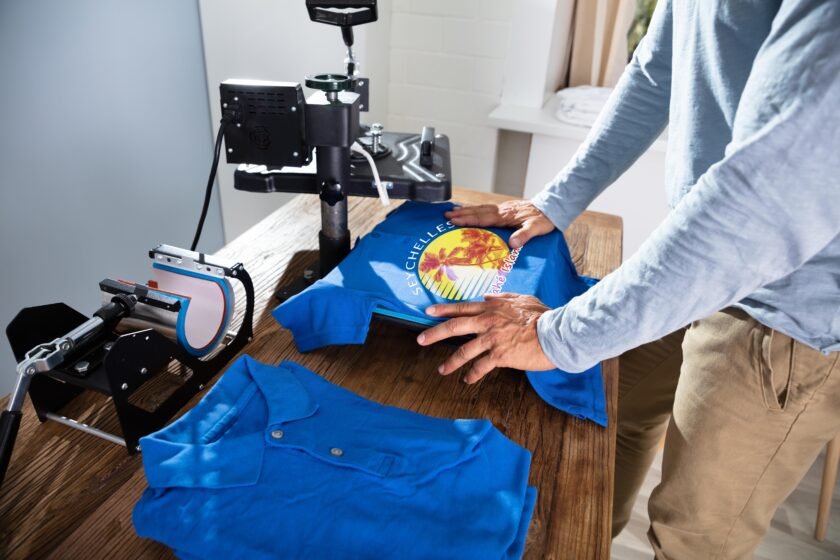
- Equipment Calibration: Maintain an industrial-grade heat press with even temperature distribution across the platen to guarantee uniform adhesive melting and prevent scorching.
- Controlled Application: Apply firm, steady mechanical pressure during the pressing cycle to drive the thermoplastic adhesive deep into the textile fibers.
- Post-Press Finishing: Perform a brief secondary pressing using a protective matte sheet to lock the ink permanently into the fabric and eliminate unwanted surface gloss.
Frequently Asked Questions
What makes a garment qualify as high retail quality?
High retail quality apparel features combed or ring-spun cotton for an ultra-smooth texture, side-seamed construction for a tailored fit, and structural reinforcements like shoulder-to-shoulder taping that prevent stretching and distortion over time.
How do digital film transfers handle heavy stretch and daily wear?
When applied correctly with commercial heat presses onto quality garments, digital film transfers offer exceptional elasticity and wash durability. They flex naturally alongside the textile without cracking or fracturing during active daily use.
Why is side-seamed construction critical for customer retention?
Side-seamed shirts follow the natural contours of the human body and maintain their geometric shape through countless laundry cycles, whereas tubular shirts twist awkwardly and degrade rapidly, leading to customer dissatisfaction.
Can small independent brands compete with major fashion labels using on-demand production?
Yes, by adopting an on-demand fulfillment model and partnering with reliable suppliers, independent brands can eliminate dead stock, offer diversified collections, and scale their businesses efficiently without massive upfront financial risk.
Building a thriving fashion brand demands an uncompromising dedication to material excellence and operational efficiency. By leaving behind the heavy financial risks of bulk manufacturing and embracing agile production methods, you position your business for long-term growth. Elevate your merchandise standards today by sourcing exceptional foundations from Custom Premium Shirt, pairing those garments with the vibrant versatility of modern decoration techniques to exceed your customers’ expectations at every turn.