School fairs, church gatherings, neighborhood festivals, fundraisers, and community celebrations often need attractions that appeal to children while remaining practical for organizers. Commercial bounce houses can become a centerpiece of these events, but choosing the right equipment involves more than comparing colors and themes.
The inflatable must suit the expected participants, available space, ground conditions, electrical supply, staffing plan, weather, and transportation capacity. Organizers and rental operators should also consider how the equipment will be installed, supervised, inspected, and removed.
The following factors can help buyers select commercial bounce houses that are appropriate for school and community events.
Identify the Expected Participants
Before comparing products, determine who will use the inflatable. An attraction intended mainly for younger children will have different requirements from one designed for older children, teenagers, or mixed-age groups.
Important questions include:
- What is the expected age range?
- How many participants may attend?
- Will users enter continuously or in scheduled groups?
- Will younger and older children need separate sessions?
- How many attendants will be available?
- Does the event need an accessible waiting and viewing area?
A traditional bounce house may be suitable for younger children at a small school event. A bounce-and-slide combination offers more activities in one unit and may help keep participants engaged for longer. Larger obstacle courses and interactive inflatables can work well for older children and events that want a more competitive activity.
The manufacturer’s operating instructions should always be reviewed for applicable user limits, height ranges, and supervision requirements.
Select the Right Type of Inflatable
Commercial bounce houses and related inflatable attractions are available in many designs, and each category serves a different purpose.
Common options include:
- Traditional bounce houses
- Bounce-and-slide combination units
- Dry inflatable slides
- Inflatable obstacle courses
- Interactive games
- Sports inflatables
- Toddler activity units
- Modular inflatable attractions
A basic bounce house is often easier to transport and install than a large combination unit. However, a combination unit can provide jumping, climbing, and sliding activities within one attraction.
Obstacle courses are useful when organizers want participants to move through the inflatable instead of remaining inside one jumping area. Interactive and sports inflatables may be appropriate for school field days, youth programs, and community competitions.
The best choice is not necessarily the largest product. It is the one that matches the audience, venue, schedule, and operating resources of the event.
Calculate the Complete Operating Area
The listed dimensions of an inflatable describe the product itself, not the entire area required for safe installation and operation.
Additional space may be needed for:
- Entrance and exit areas
- Blowers and inflation tubes
- Anchoring or ballast
- Electrical cables
- Attendant positions
- Waiting lines
- Safety mats
- Access for setup and removal
- Clearance from buildings, fences, trees, and overhead hazards
A bounce house that fits within the measured lawn may still be unsuitable if there is not enough room for its blower, anchors, and controlled entrance area.
Before purchasing or booking an inflatable, measure the complete site and identify gates, slopes, trees, drainage areas, underground utilities, overhead lines, and other possible obstructions. The access route should also be wide and clear enough for the packed product and any moving equipment.
Evaluate the Ground Surface and Anchoring Options
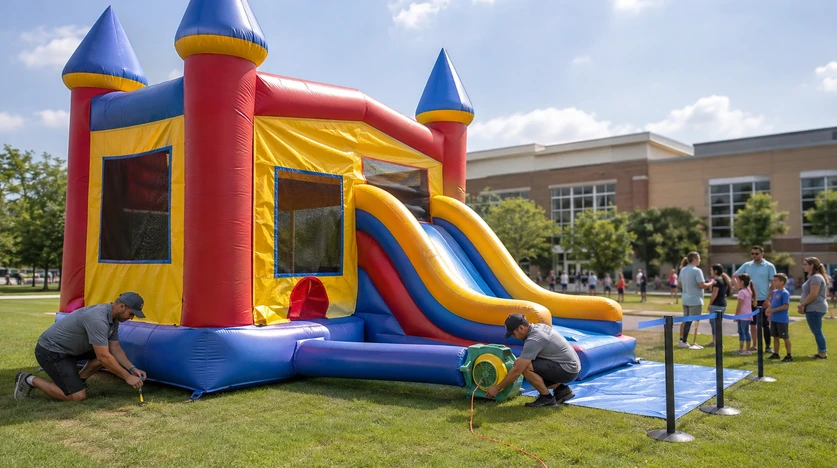
Ground conditions affect how an inflatable can be installed. Grass is often suitable for staking when the site owner permits it and the ground is appropriate. Concrete, asphalt, indoor floors, and other hard surfaces normally require a different anchoring or ballast plan.
Buyers and event organizers should confirm:
- The type and condition of the surface
- Whether ground stakes are permitted
- The number and location of anchor points
- The approved anchoring method
- Whether ballast is required
- The space available around each anchor
- Whether underground utilities have been identified
The anchoring plan should follow the manufacturer’s instructions and any applicable local requirements. Improvised attachment points or unapproved anchoring arrangements should not be used.
Indoor installations also require careful planning. Ceiling height, doors, emergency exits, floor protection, sprinkler systems, and the placement of ballast and blowers may all affect whether a product is suitable for the venue.
Confirm Power and Site Access
Most commercial bounce houses use continuous-air blowers that must operate throughout the event. Before setup, organizers should confirm the blower specifications and available electrical supply.
The site plan should consider:
- Number of blowers
- Blower power requirements
- Distance from electrical outlets
- Circuit capacity
- Extension-cord specifications
- Cable protection
- Generator requirements, if applicable
- Backup arrangements for a power interruption
Electrical cables should be positioned to reduce tripping hazards and protected from participants, vehicles, and water. Electrical equipment used outdoors should be suitable for the conditions and handled according to the manufacturer’s instructions and local electrical requirements.
Access is equally important. A heavy packed inflatable may not be practical for a site with stairs, narrow gates, steep slopes, or long distances between the delivery vehicle and setup area. These details should be reviewed before the event rather than discovered during installation.
Review Commercial Construction and Product Information
Equipment intended for repeated school and community use should be manufactured for commercial operation. Buyers should request clear specifications and examine the areas that experience the most wear.
These commonly include:
- Entrances and exit steps
- Climbing lanes
- Slide platforms
- Wall connections
- Anchor points
- Inflation tubes
- Interior obstacles
- High-contact floor areas
Commercial construction should include appropriate materials, stitching, and reinforcement for the intended use. Buyers should also ask what is included with the product, such as blowers, repair materials, storage bags, operating instructions, and warranty information.
Rendered product images can help explain a design, but they should not replace written specifications and clear photographs of important structural details.
A Manufacturer’s Practical Perspective
From EastJump’s experience reviewing commercial inflatable requirements, buyers often begin by comparing colors, themes, and inflated dimensions. However, the details that have the greatest effect on daily rental operations are usually packed weight, the number of packages, blower requirements, anchor-point locations, site access, and the staff needed for setup.
Two bounce houses with similar operating dimensions can create very different workloads. A standard bounce house may fit into one manageable package and require a relatively simple setup, while a larger combination unit may need multiple packages, additional blowers, more storage space, and extra staff.
The larger attraction may look more impressive, but the smaller unit could be suitable for a wider range of venues if it is easier to transport and install.
Before approving a purchase, rental operators should compare:
- Inflated dimensions and total operating area
- Packed dimensions and packed weight
- Number of packages
- Blower quantity and local electrical requirements
- Anchor-point locations and approved anchoring methods
- Vehicle, storage, and staffing requirements
- Product-specific instructions and available documentation
Reviewing these details helps buyers understand how a commercial bounce house will work after it leaves the factory, not only how it appears in a product photograph.
Plan for Supervision and Queue Management
A successful event needs more than an installed inflatable. Organizers should create a clear operating plan for admission, supervision, user flow, and emergency response.
The plan may include:
- Trained attendants assigned to each attraction
- A clearly marked entrance and exit
- Separate sessions for different age or size groups
- Visible operating rules
- Controlled participant numbers
- A safe waiting line
- Procedures for stopping operation
- Communication between attendants and event managers
The entrance should remain visible to the attendant. Bags, shoes, food, drinks, sharp objects, and other prohibited items should be kept away from the activity area.
At busy events, timed sessions or wristband groups can help manage demand. This approach reduces crowding at the entrance and gives attendants more control over participant numbers.
Prepare for Weather Changes
Outdoor inflatable events are affected by weather. Wind, rain, heat, lightning, and rapidly changing conditions can influence safe operation.
Event organizers should monitor the forecast before the event and continue checking conditions throughout the operating period. A written weather plan should explain who is responsible for monitoring conditions and when operation must stop.
The plan should address:
- Manufacturer-specified wind limits
- Wind measurement at the event site
- Rain and lightning procedures
- Excessive heat
- Loss of electrical power
- Evacuation of participants
- Deflation or securing of equipment
- Conditions required before reopening
An inflatable should not continue operating simply because participants are waiting. If conditions exceed the product’s operating limits, use should stop and the manufacturer’s shutdown procedures should be followed.
Consider Transportation and Setup Labor
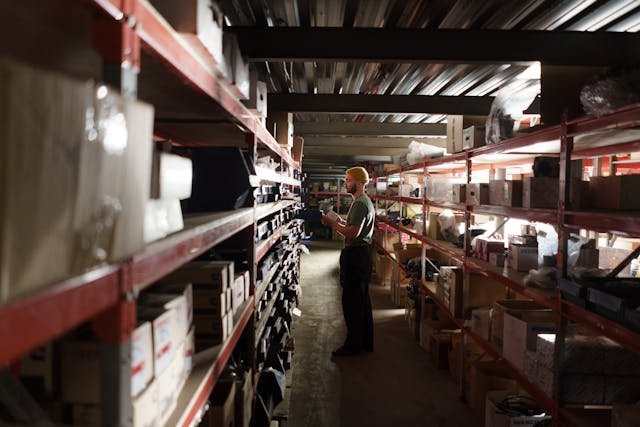
Packed dimensions and weight can be just as important as inflated size. Larger units may require trailers, dollies, winches, additional staff, or other moving equipment.
Before selecting a product, confirm:
- Packed weight
- Packed dimensions
- Number of packages
- Vehicle or trailer requirements
- Number of staff needed
- Typical setup and removal time
- Cleaning and drying requirements
- Storage space between events
A product that is difficult to move may increase labor costs and limit the number of venues it can serve. Wet equipment also requires an appropriate drying plan before storage to help prevent moisture-related problems.
Schools and community organizations using volunteers should be especially careful not to assume that a large commercial inflatable can be moved and installed safely by a small group without suitable equipment or training.
Calculate the Total Cost
The purchase price is only one part of the overall investment. Buyers should calculate the full cost of acquiring, operating, transporting, and maintaining the equipment.
Possible costs include:
- Product price
- Shipping and import expenses
- Taxes and applicable fees
- Blowers and electrical accessories
- Anchoring or ballast equipment
- Transportation equipment
- Setup and event labor
- Cleaning and maintenance
- Repairs and replacement parts
- Insurance
- Inspections or permits
- Warehousing
A lower-priced product may not provide better value if it creates frequent repair needs or is unsuitable for common venues. Likewise, an oversized attraction may produce limited returns if it requires more labor and transportation capacity than the operator can provide.
The most useful comparison considers both the initial purchase cost and the resources required for each event.
Use a Pre-Event Checklist
A written checklist helps organizers confirm that important details have been reviewed before participants arrive.
A practical checklist may include:
- Product inspected before setup
- Site dimensions confirmed
- Ground surface checked
- Anchoring completed according to instructions
- Blowers and inflation tubes inspected
- Electrical supply confirmed
- Cables protected
- Entrance and exit areas cleared
- Safety mats positioned where required
- Operating rules displayed
- Attendants assigned
- Participant limits confirmed
- Weather-monitoring equipment available
- Emergency and shutdown procedures reviewed
Records of inspections, maintenance, repairs, and operating issues can also help rental companies manage their equipment over time.
Final Thoughts
Choosing commercial bounce houses for school and community events requires a balance between participant appeal and practical operation. Colors and themes may attract attention, but site compatibility, construction, anchoring, electrical supply, supervision, transportation, and weather planning determine whether the product is suitable for repeated use.
Buyers should compare written specifications, ask detailed questions, and evaluate the complete operating requirements before placing an order. Event organizers should also confirm applicable local rules, insurance conditions, venue policies, and inspection requirements.
With the right information at the right stage, schools, rental operators, and community organizations can select commercial bounce houses that are easier to manage, appropriate for their venues, and better prepared for safe and successful events.