(BPT) – Key takeaways:
- Economic development organizations (EDOs) help fund small businesses, create new opportunities and revitalize public spaces in communities nationwide, but most people may not be familiar with the term.
- EDOs like the Michigan Economic Development Corporation (MEDC) work to improve communities through investing in local businesses, attracting new business to the area and enhancing spaces like downtowns and parks.
- Whether you’re an entrepreneur, a developer or simply a resident, you’ve likely already benefited from an economic development program in your community.
While some people haven’t heard the term “economic development organization” (also called an EDO), the results of these organizations show up everywhere. EDOs are making a positive impact in communities in many different ways, from new job postings to a vacant storefront transforming into a coffee shop to the park families visit every weekend.
What does an EDO do for your community?
EDOs commonly focus on areas such as enhancing public spaces, supporting the workforce through training, helping entrepreneurs and businesses create local jobs and recruiting new business investments in a specific area.
For example, the Michigan Economic Development Corporation (MEDC) is an EDO with a mission to support small businesses and entrepreneurs, attract businesses to the state, grow the workforce and develop attractive places, from downtowns to parks and more. These goals are accomplished through programs like small business grants, mentorships for entrepreneurs and public space revitalization projects.

The details may look different from state to state, but the mission remains the same: Somewhere in your own community, an EDO is working to help it thrive.
How do EDOs affect jobs, communities and small businesses near you?
There are numerous ways EDOs make a real-life impact in your area. Using the MEDC as an example, here are a few ways EDOs can benefit businesses and communities throughout a state:
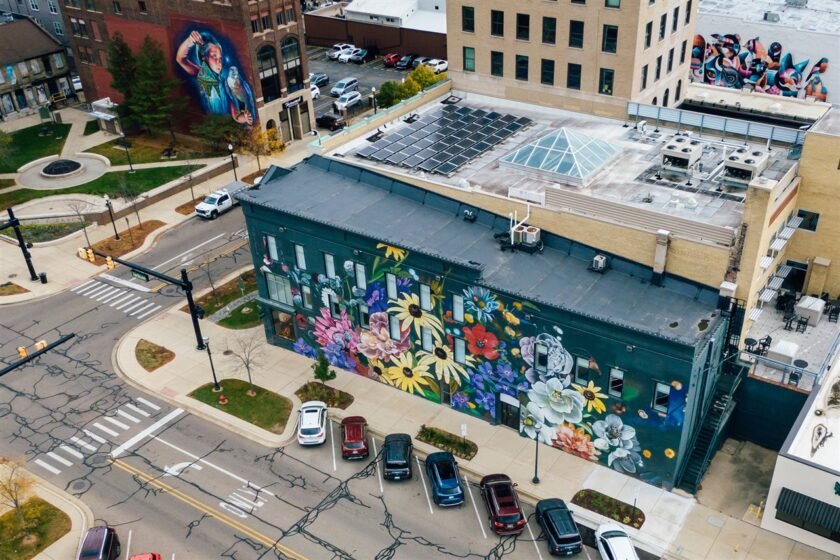
- Beautifying downtowns like Howell, a participant in the MEDC’s Michigan Main Street Program. Communities engaged with this program are eligible for grants that support small businesses and placemaking projects in their districts. Howell transformed its downtown into a destination by attracting new and revitalized businesses, like Coratti’s Pizzeria Bar and Bocce, Frontal Lobe co-working space and the recently restored Howell Opera House. The businesses were complemented by new murals, art-inspired bike racks and an alley transformed into a pedestrian plaza and outdoor art gallery. These projects led to Howell receiving the prestigious Great American Main Street Award in 2018.
- Providing small business support to help entrepreneurs transform ideas into thriving companies. For example, a business development grant helped West Michigan tech startup Ludus expand its digital ticketing platform and create new jobs. The MEDC also provides hands-on mentorship through Small Business Support Hubs like TechTown Detroit, which offers personalized resources to aspiring entrepreneurs. Groovy Donuts built a decade of bakery success with mentorship and grant support from the Lansing Economic Area Partnership’s TREK Small Business Support Hub.
- Growing the entrepreneurial ecosystem to connect founders with the resources they need to scale. The MEDC provided a $1.5 million business incubator grant to support Flint’s 100K Ideas, a nonprofit organization helping local entrepreneurs launch and build their ideas through direct client services, workshop programming, pitch competitions, youth engagement and more. Additionally, a statewide competition created by the MEDC and the MSU Research Foundation, the PitchMI Startup Competition, connects promising Michigan founders with the capital, visibility, relationships and resources they need to move farther, faster.
- Revitalizing buildings steeped in history breathes new life into old structures and adds critical housing to communities, with support from placemaking grants like those behind The Milton in downtown Battle Creek and the Walter French apartments in Lansing. Formerly known as the Heritage Tower and vacant for over a decade, The Milton project transformed a historic community building into a vibrant mixed-use development including apartment units and commercial space. In Lansing, the former Walter French Junior High School was converted into a mixed-use affordable housing and community hub.
- Attracting major employers through incentives for business investments, site readiness and other initiatives that create a flourishing business climate. Thanks to the MEDC’s efforts, companies like LG Energy Solution and Torc Robotics have boosted job creation and investment across the state. LG Energy Solution opened its new Lansing battery plant in August 2026, and a recent report by the W.E. Upjohn Institute for Employment Research found the project will generate $2.53 in economic benefit for every $1 of state support. Torc Robotics, an independent subsidiary of Daimler Truck AG, chose to build its new engineering innovation center in Ann Arbor, bringing up to 500 new jobs to the region.
Through these and other programs, the MEDC continually works to support thriving communities throughout the state of Michigan, work that’s helped the state climb to No. 6 in CNBC’s Top States for Business rankings and land in Area Development’s Top 10 for three years in a row. The details may look different from state to state, but the mission remains the same: Somewhere in your own community, an EDO is working to help it thrive.
Frequently asked questions
- What does “economic development” mean?
Simply put, this means making investments in and creating programs for the improvement of a city, state or region. Economic development is often performed by government agencies such as the MEDC in Michigan, nonprofit organizations and private businesses, with goals like improving local infrastructure, enhancing public spaces and creating more opportunities for employers and employees. - What’s the difference between a chamber of commerce and an EDO?
The two are often confused, but they serve different roles. A chamber of commerce is a membership organization that advocates for local businesses and is typically funded through member dues. An EDO like the MEDC focuses on economic growth for a specific city, state or region, often through grants, site development and partnerships with local organizations rather than membership. The two frequently work together, but an EDO is usually the one supporting programs like small business hubs or downtown revitalization. - Where can I find help for my business?
Start with your local EDO for services like mentorship, training, technical assistance and networking opportunities. In Michigan, for example, the MEDC connects business owners with these resources, personalized guidance, funding opportunities and more: MichiganBusiness.org.