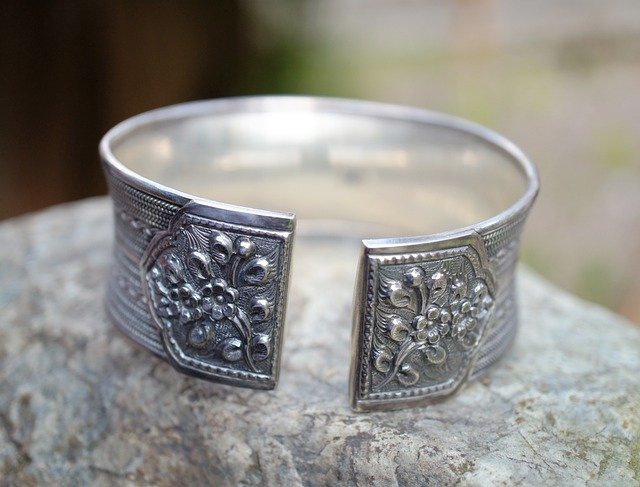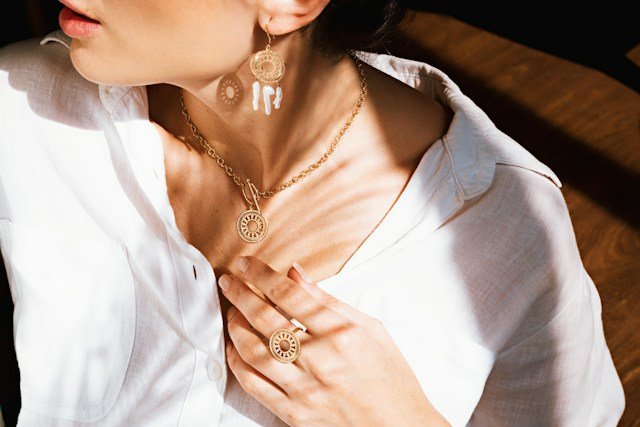
Personal adornment has helped people communicate identity, belonging, and creativity for thousands of years. A necklace may preserve a family memory, while a carefully chosen ring or textile can reflect personal taste. These objects also carry cultural meaning that extends far beyond decoration. Looking at their history offers a richer understanding of why jewelry, clothing, and body art remain such powerful forms of expression.
Ancient Roots of Self-Expression
Early adornment appeared long before modern cities or written language. Archaeologists have found pierced shells, beads, and pigments that suggest people were expressing social connections tens of thousands of years ago. The Center for Academic Research and Training in Anthropogeny offers a useful overview of early personal adornment and its connection to symbolic thought.
Materials depended on what communities could find nearby. Shells were common along coastlines, while inland groups worked with stone, bone, clay, and plant fibers. Repeated patterns or difficult-to-source materials may have indicated status, community ties, or trade relationships. Today, you can apply the same storytelling principle by learning where an inherited piece came from and recording its history for the next generation.
Adornment Across Cultures
Adornment can mark ancestry, faith, age, achievement or participation in a community. Puerto Rican style, for example, reflects Taíno, African, Spanish and wider Caribbean influences. Gold jewelry, botanical motifs and handcrafted accessories may carry family or regional associations, though their meaning varies from person to person. A traditional-inspired Taíno ring may also reflect elements of Indigenous Caribbean heritage, drawing on symbols and artistic influences connected to Taíno culture.
The Denver Botanic Gardens explores how plants, natural materials and cultural traditions intersect through cultural body adornment. This context matters when you wear designs linked to a community outside your own. Learn the motif’s origin, support makers who understand the tradition, and avoid treating ceremonial items as passing trends. For contemporary body jewelry, options such as orbital cartilage earrings show how placement, material, and ring design can create a highly individual look.
Modern Interpretations of Style
Modern style draws freely from historical forms while using new production methods and materials. Layered necklaces recall ancient bead arrangements, signet rings turn initials into compact personal symbols, and minimalist pieces translate familiar forms into simpler lines. Digital design has also made unusual sizes and customized details easier to find.
Build a personal collection around pieces that work with your actual routine. A subtle ring or small pendant may suit daily wear, while a larger handcrafted item can anchor an outfit for a celebration. Before buying, check dimensions with a ruler since close-up product photos can make jewelry appear larger. For body jewelry, confirm the correct size with an experienced piercing professional, especially when one piece must sit comfortably across two healed openings.
Quality Materials for Longevity
Material affects appearance, comfort, and durability. Solid gold can last for generations when cared for properly, while titanium and niobium are lightweight options found in many contemporary jewelry styles. Stainless steel varies by grade, so clear product specifications matter. Plated finishes may wear down over time, particularly on pieces exposed to water, friction, or skin products.
Read the full material description instead of relying on color alone. Store separate pieces in soft pouches to reduce scratches and keep delicate chains from tangling. Remove everyday jewelry before swimming or applying lotions, then follow the seller’s cleaning instructions. If you notice discoloration, rough edges, or discomfort, stop wearing the piece until a qualified professional can inspect it.
Making Your Mark
A meaningful style develops through deliberate choices. Start with one detail that already matters to you, such as a family initial, a locally made charm, or a color connected to a favorite place. From there, add pieces that share a material, shape, or story. This creates visual consistency without requiring a perfectly matched set.
Keep a short record for valuable or sentimental items. Note the maker, material, purchase date, and any family history associated with the piece. Photos can help document condition and prevent stories from being lost. Most of all, give your collection room to change as your life does. The strongest personal adornment feels connected to a real memory, relationship, or part of your identity each time you wear it.